Does cultural alignment matter in therapy?
What the research says about cultural fit in therapy, and why it looks different for Indians in India, Indians abroad, and those who grew up abroad.
By Spaces Editorial Desk · 26 Oct 2026 · Updated 11 Nov 2026
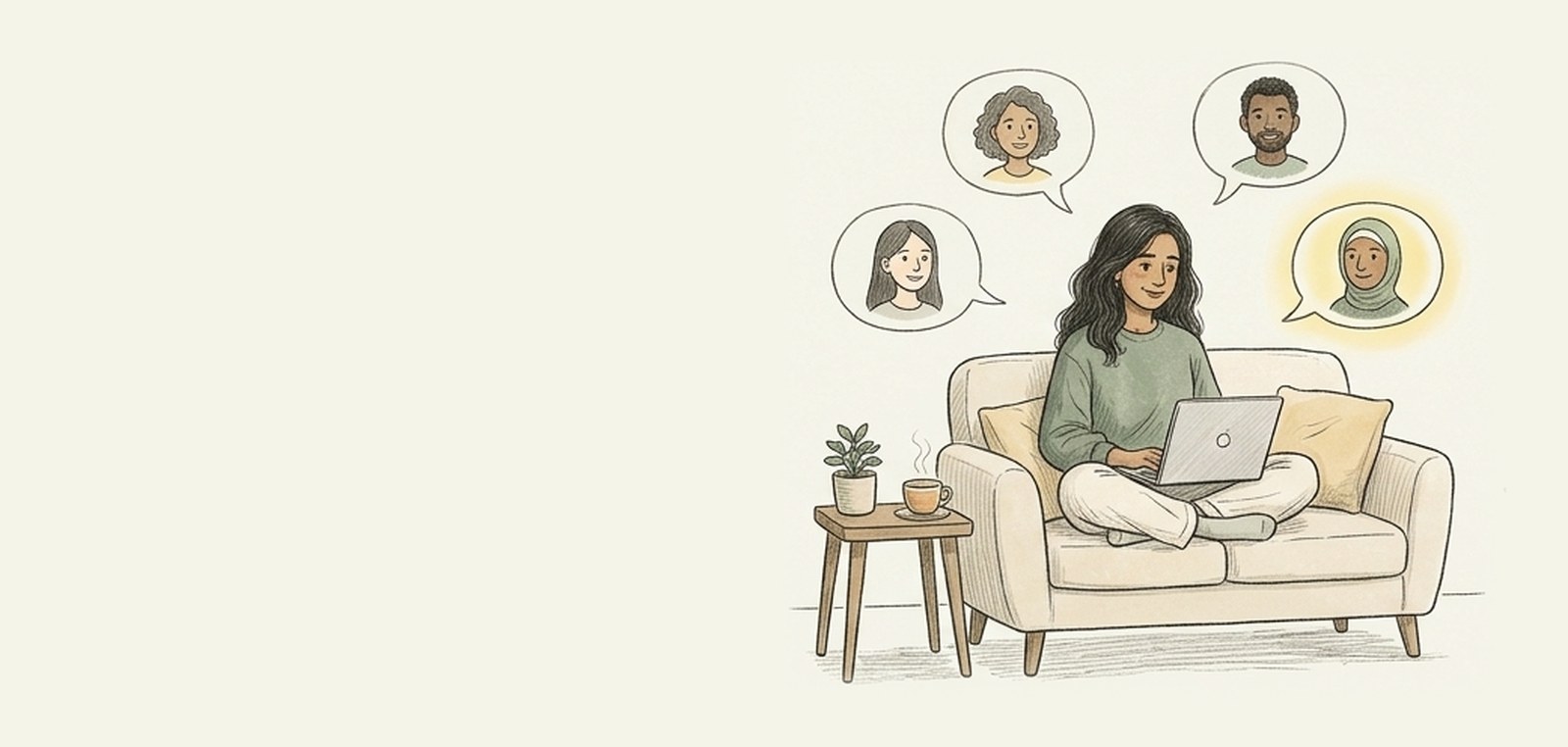
Cultural alignment is linked to better therapy outcomes.
You’ve finally booked the session. You start explaining what’s been weighing on you: the pressure from home, the guilt about living far away, the expectation that you’ll handle it quietly. Twenty minutes in, you realise you’ve spent most of the hour explaining what a joint family is.
Many Indians who try therapy have a version of this story. Not because the therapist was unkind or unqualified, but because so much of their energy went into translating their life instead of talking about it.
I spent 15 minutes explaining to a therapist [who didn’t share my cultural background] why it was not submissive to touch parents’ feet in our culture. Very expensive 15 minutes.
— Tech executive, 43, Fremont, CA
What “cultural alignment” actually means
Cultural alignment isn’t about finding someone with the same surname or from the same city. It’s about working with someone who already understands the context your life sits in, such as:
- family structures where parents’ opinions carry real weight, well into adulthood
- the push and pull of duty, independence and guilt
- how stigma around mental health can shape what you say, and what you don’t
- the pressures of migration, careers and being “the one who made it”
- languages and phrases that carry feelings English doesn’t quite hold
A culturally aligned therapist doesn’t need these explained. They recognise them, and they know they’re not the problem to be fixed. They’re part of who you are.
Is cultural alignment important? What does the research say?
Most research on this comes from the US, where Indian Americans are counted as part of the wider Asian American community. Four findings stand out.
Asian Americans, including Indian Americans:
Sources: Psychiatric Services (2020), Sue et al. (1991)
Many people don’t know where to start. In a national US study, Asian Americans who felt they needed mental health care were about 60% more likely than White Americans to say they didn’t know where to go for it. They were also far less likely to get treatment at all: among adults with depression, about a third of Asian Americans received care, compared with seven in ten White Americans (Psychiatric Services, 2020).
The same need. A different path.
 AnitaAnaida
Meet Anita and Anaida, both 30-year-old women living in Denver, CO. Anita is an Indian American; Anaida is a White American.
 I feel I need
mental health careI feel I need
mental health care
Both feel they need mental health care.
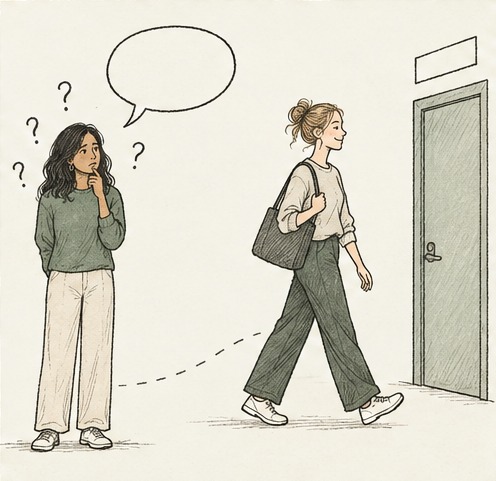 I don’t know
where to go.Culturally alignedTHERAPIST
Like many Asian Americans, Anita is 60% more likely to say she doesn’t know where to go. She becomes part of the majority of Asian Americans with depression (65%) who don’t get treatment.

Anaida, on the other hand, like a majority of White Americans with depression (70%), gets the help she needs.
Source: Psychiatric Services (2020)
Cultural match keeps people in care. A landmark study of Los Angeles County’s mental health services found that Asian American clients matched with a therapist who shared their ethnicity were about 80% less likely to drop out after the first session. They also stayed in therapy for nearly twice as many sessions (Sue et al., 1991). For clients whose first language wasn’t English, sharing a language with their therapist made a difference too.
Feeling understood is linked to better outcomes. A 2018 review found that how culturally competent clients felt their therapist was had a meaningful link to how well therapy worked, while therapists’ ratings of themselves did not. The same review found that therapy adapted to a person’s culture worked better than standard approaches (Soto et al., 2018).
What changes when therapy is culturally aligned?
Odds of dropping out after the first session
Asian American clients matched with a therapist of the same ethnicity.
Source: Sue et al. (1991)
Link between therapy outcomes and how culturally understood clients felt
Across 15 studies of clients’ ratings of their therapists.
Source: Soto et al. (2018)
It’s not only about access. A national US study found that Asian American adults with untreated mental health conditions were more likely than White Americans to say they didn’t think they needed treatment, and more likely to stop once they’d started (Green et al., 2020). The researchers pointed to culturally sensitive conversations about mental health, with providers who understand how distress is talked about at home, as a way to help more people get and stay in care.
The takeaway: feeling understood helps people find care, stay in it and get more out of it. And it’s your experience of being understood that counts.
“Indian” isn’t one culture
Where you grew up, where you live now and how long you’ve lived there all shape a context that is uniquely yours. A good match looks at that context, not just your passport or your surname.
Which sounds like you?
Tap the card closest to your situation to see what a good fit looks like for you.
If you live in India
Sharing a country with your therapist doesn’t guarantee they share your world. India holds many cultures: region, language, faith, community, city or small town, joint or nuclear family. A therapist from a different background may still need a lot explained, or may carry assumptions of their own.
For many people in India, fit means:
- someone who can work in the language you feel most yourself in, whether that’s Hindi, Marathi, Tamil, Bengali or a mix of English and your mother tongue
- an understanding of family dynamics, marriage expectations and the weight of “what will people say”, without judgement in either direction
- care that adapts Western-trained methods to Indian life, rather than applying them wholesale
- confidence that your choices, whether a love marriage, an inter-faith relationship or a queer identity, will be respected and not quietly corrected
If you grew up in India but moved abroad
For first-generation Indian immigrants (NRIs) in the US, UK, Canada, Australia or elsewhere, the pressures are often specific: visa timelines, career stakes, building a life far from family, and the guilt of not being there as parents grow older. Many carry the quiet expectation of being the family’s success story. And after months and years of living with different ways of thinking, many face new adjustment challenges and develop beliefs that are neither fully traditional Indian nor fully Western.
Here, fit often means a therapist who understands both worlds: the one you came from and the one you’re building. They should be licensed where you live, while still understanding why a phone call from home can change your whole week.
If you grew up abroad
Second- and third-generation Indians often describe feeling too Indian for school and not Indian enough for family. They may navigate their parents’ sacrifices, expectations around education, dating and marriage, and an identity that doesn’t fit neatly in either culture.
The right match here isn’t always a therapist from India. It’s often someone who understands the diaspora experience itself: the in-between, the code-switching, and the love and friction that can exist in the same family. A therapist with lived experience of growing up this way may be the better fit.
Feeling seen is the foundation everything else is built on.
How Spaces matches for these nuances
At Spaces, cultural fit is something we look at carefully, not a box we tick. In your Care Navigation call, your Navigator asks about the things that shape your context:
- where you grew up and where you live now
- the languages you think and feel in
- your family, faith and community, and how close you are to them
- what you want from a professional and, sometimes just as important, what you don’t
We then weigh each professional’s own background and lived experience alongside their qualifications, specialization and licence. A second-generation client in New Jersey might be matched with a diaspora therapist who grew up between cultures, while someone in Pune might be matched with a Marathi-speaking clinician who understands joint-family life.
But nothing outweighs your own preferences. The strongest therapeutic alliance forms when you trust the person caring for you, and sometimes that means someone who will challenge beliefs you’ve absorbed from your culture. We take all of this into account, whether we’re matching you with a therapist on our panel or referring you to a professional in our wider network.
Curious how we find the right fit, step by step? Read: How guided matching at Spaces helps you find the right therapist
Cultural fit is necessary, not sufficient
Culture is one part of a good match, not the whole of it. The right professional also needs:
- the right qualifications and licence for what you’re facing, and for where you live
- experience with your specific concerns, whether that’s anxiety, grief, burnout or a major life change
- a style and personality you can open up to
- availability in your time zone, and at a cost that works for you
And sometimes what you need isn’t therapy at all. It might be coaching, which supports goals and transitions without diagnosis or clinical treatment. Knowing which is right is part of finding a good fit.
Finding someone who gets it
Whether you’re looking for an Indian therapist or simply someone who understands Indian culture, you shouldn’t have to choose between someone who understands your culture and someone who’s right for your needs. That’s exactly the gap Spaces was built to close.
For a step-by-step guide, read: Is there such a thing as the right therapist? Here’s what to look for.
Not sure where to start? Book a free 20-minute Clarity Call and ask us anything. No intake, just answers.
Not sure where to start?
Book a free 20-minute Clarity Call and ask us anything about finding the right therapist or coach. Not a therapy session or assessment. No intake, just answers.